

Body Composition Analysis with the InBody 770S

Body composition analysis using the InBody 770S at the LINOVE Clinic helps assess fat mass, skeletal muscle mass, and fluid distribution in the body. The test allows you to track changes over the course of a diet or exercise plan, even if your body weight remains largely unchanged.

The test is non-invasive, involves no needles, and uses no X-rays. Afterward, you will receive a results sheet and an explanation of the measurements.

This test may be helpful if:

  • Your weight hasn't changed significantly, but you want to find out if your fat and muscle mass have changed;
  • lose weight and want to track changes in body fat and muscle mass;
  • you want to take an initial measurement before starting a diet, exercise routine, or course of body treatments;
  • you want to supplement your assessment of weight and body mass index with information about fat and muscle mass, for example, by exercising regularly;
  • The doctor recommended assessing muscle mass or fluid distribution in the body.

Book now

We will contact you shortly to clarify the procedure and time of your visit.

+37124401084

Starting at

€ 40,00

Buy online

Get a discount when purchasing 2 or more sessions.

Starting at

€ 40,00

€40.00

Amount

At a glance

A Brief Overview of Body Composition Analysis

Before the visit

Before the visit

  • Before the visitDo not eat for 3–4 hours before the test. Do not schedule the test immediately after physical activity. After an intense workout, wait until your body has recovered.
  • Before the visitDo not consume coffee or alcohol for 24 hours beforehand.
  • Before the visitDo not go to the sauna, take a hot bath, or shower immediately before the examination. Do not apply cream or oil to your hands or feet before the measurement.
  • Before the visitOn the day before and on the day of the test, drink water as you normally would. If your doctor has prescribed a fluid intake restriction, follow it. Before the test, use the restroom and stand quietly for about five minutes.
  • Before the visitChoose light, comfortable clothing. Before the measurement, remove any jewelry and your watch, and take any items out of your pockets.
  • Before the visitThis measurement must not be performed on individuals with a pacemaker, an implantable defibrillator, or a similar electronic life-support device.

    If you are pregnant, consult your doctor about the necessity and appropriateness of the test before signing up.

    Fluid levels may fluctuate during the menstrual cycle. To make it easier to compare results, it is best to schedule repeat measurements during a similar phase of the cycle.

What happens during the procedure

What happens during the procedure

  • What happens during the procedureBefore the measurement, please take off your shoes and socks and remove any jewelry and your watch. You do not need to undress completely.
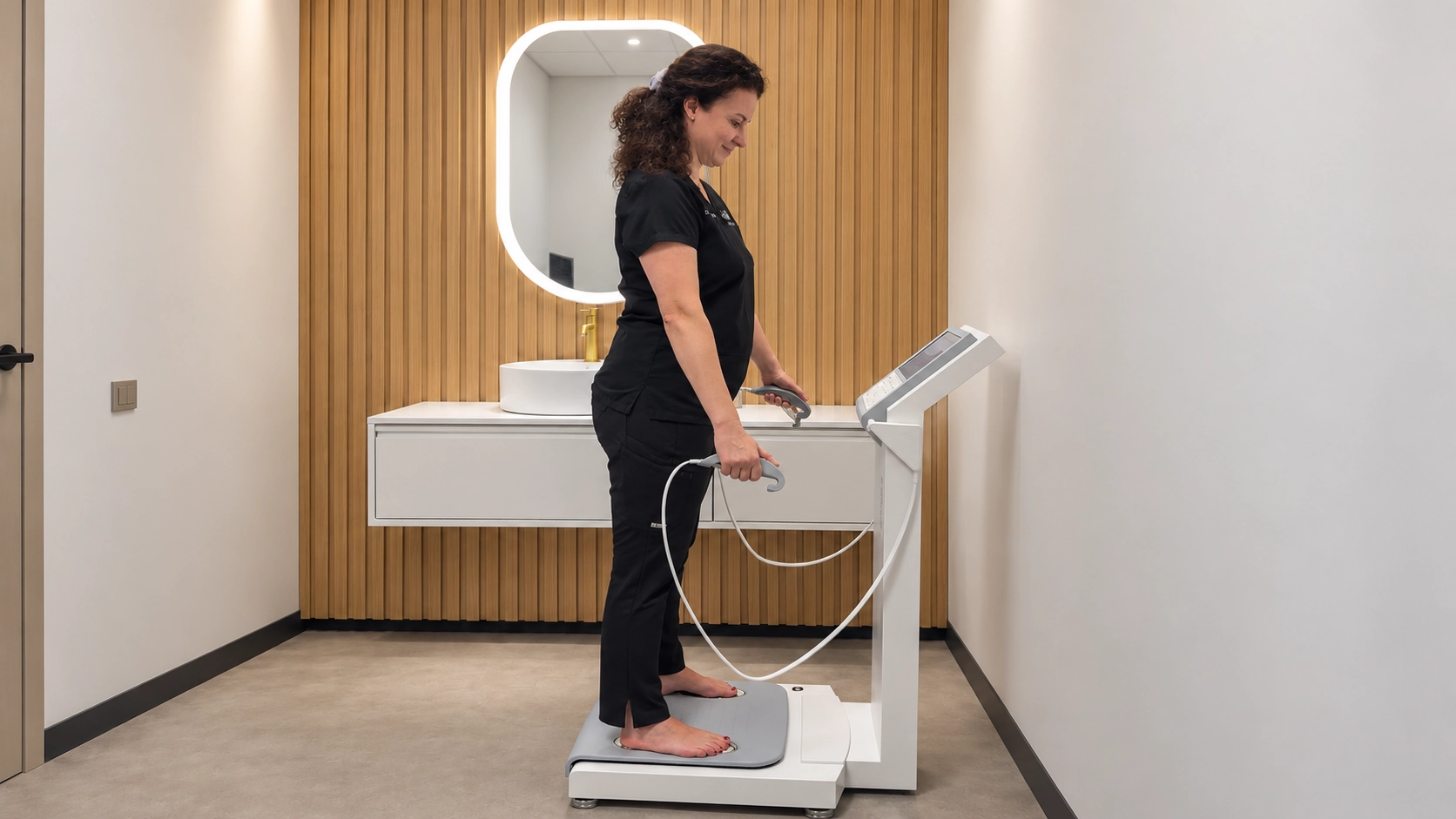
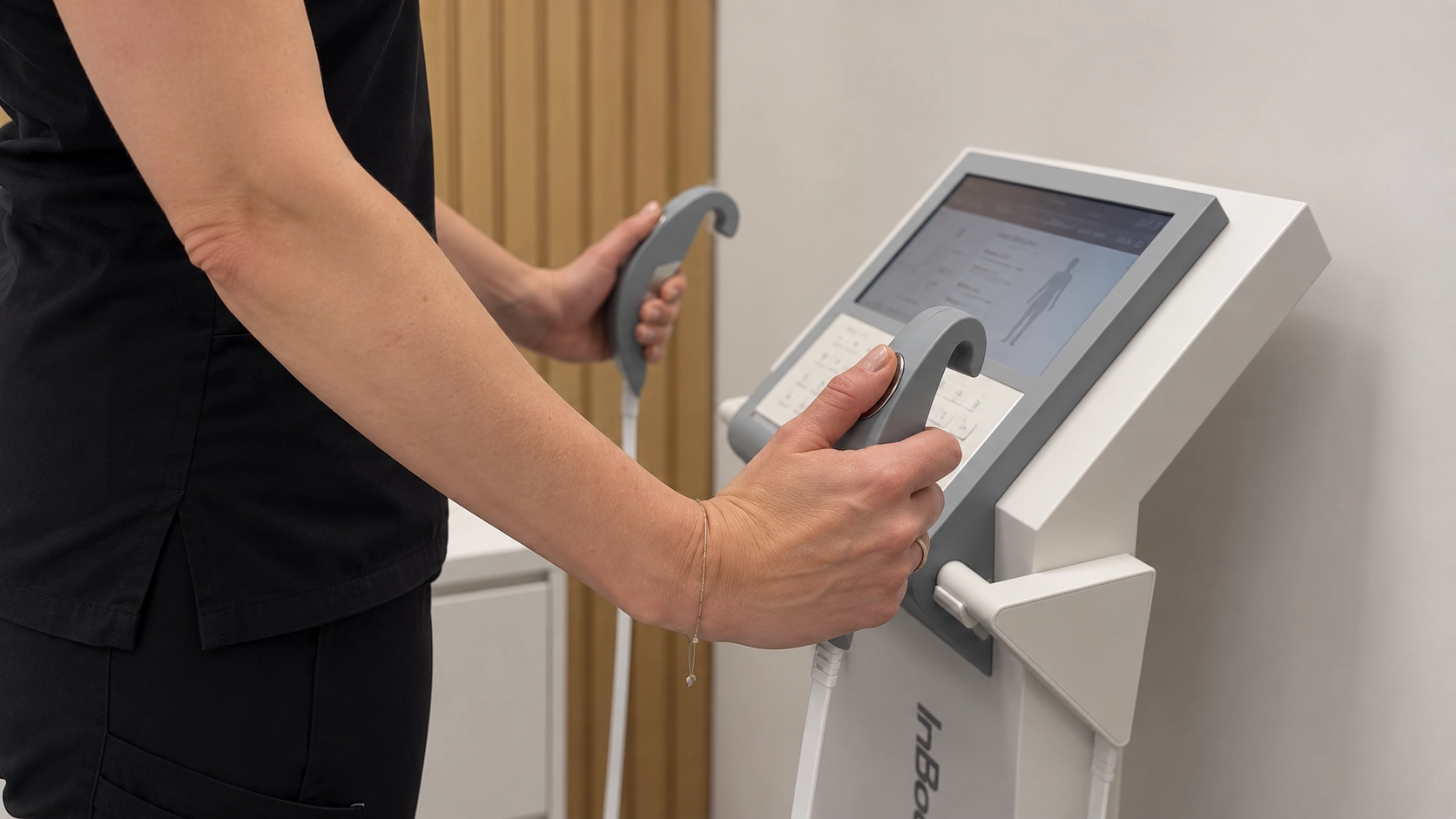
  • What happens during the procedureStand barefoot on the machine's platform and grip the handles. The electrodes will make contact with your palms and feet.
  • What happens during the procedureDuring the measurement, stand still, keeping your arms slightly away from your body, and follow the device's instructions.
  • What happens during the procedureThe measurement itself takes less than a minute. Including preparation, data entry, and printing the results, you should allow about 15 minutes for the visit.
Results

Results

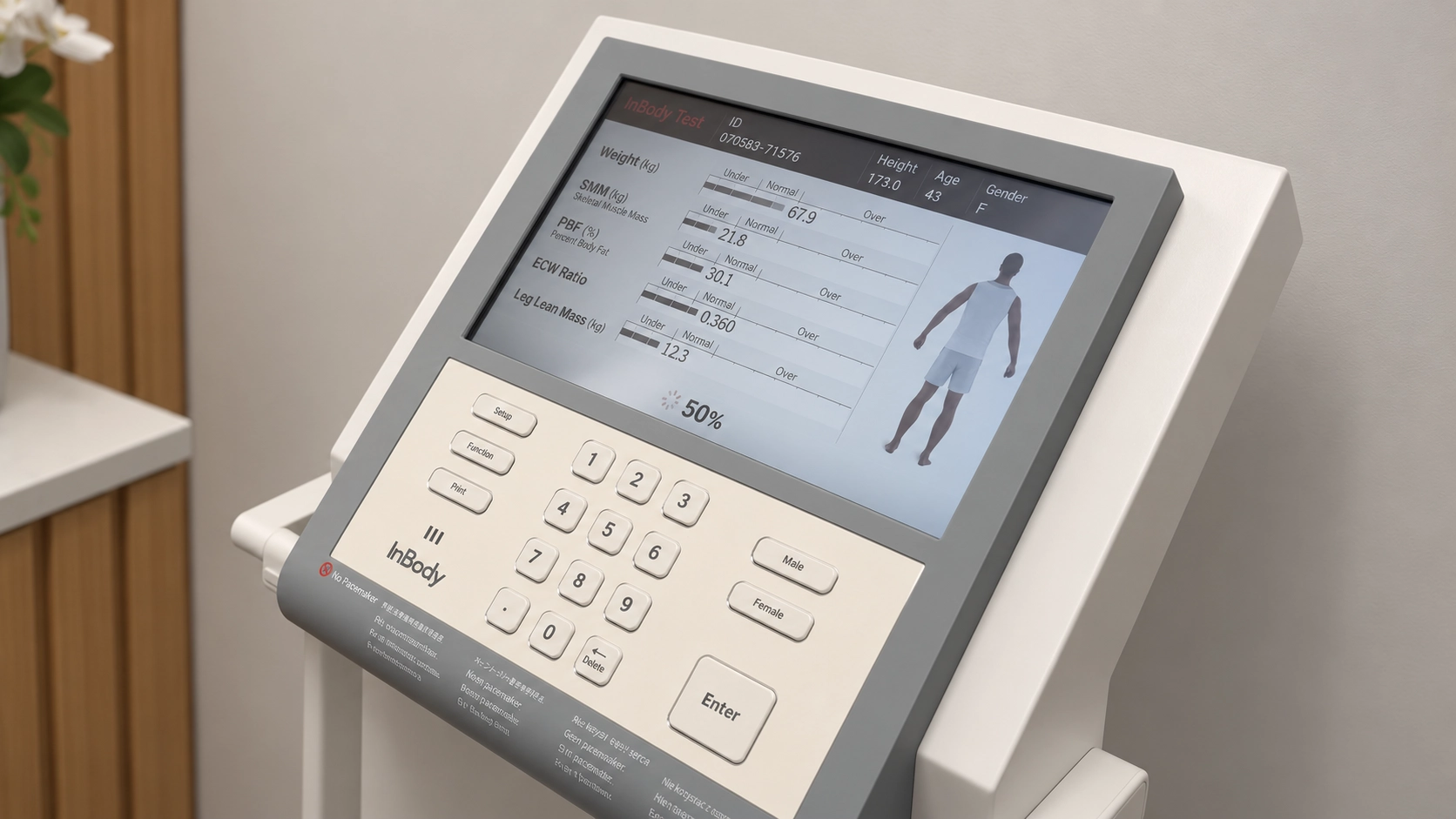
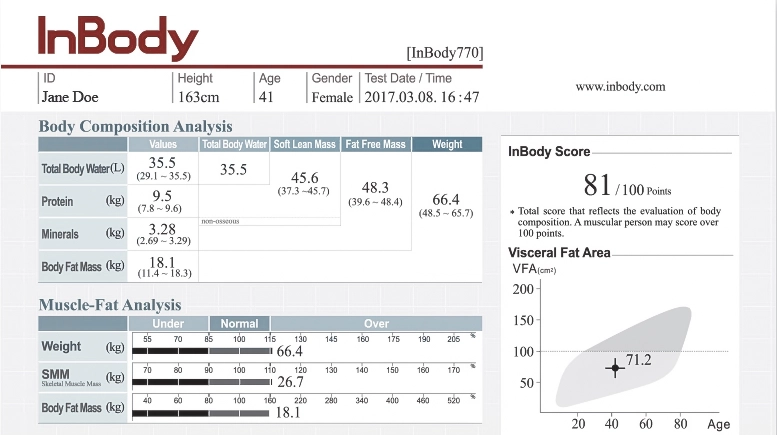
  • ResultsThe results page includes information on body weight, fat mass and percentage, skeletal muscle mass, the distribution of lean body mass in the arms, legs, and trunk, as well as body water. It also includes an assessment of visceral fat and a calculation of basal metabolic rate.

    Basal metabolic rate describes energy expenditure at rest. Total daily calorie needs also depend on physical activity and other factors.

  • ResultsAn explanation of the indicators has been included with the results sheet. The reference ranges help you interpret the results, but a single deviation does not in itself indicate a disease.
  • ResultsResults are evaluated taking into account the patient's health status, how they feel, and the conditions under which the measurement was taken. If a medical interpretation of the results is needed, a doctor's consultation must be scheduled separately.
Frequency

Frequency

  • FrequencyThe first measurement reflects body composition on that particular day. Repeated measurements under similar conditions help assess changes over time.

  • FrequencyTo monitor changes in fat and muscle mass, a follow-up measurement can be scheduled after 2–4 weeks. Slight differences between measurements may be due to fluctuations in fluid levels, so they do not always indicate changes in fat or muscle mass.

    If the test was ordered by a doctor, the frequency of repeat testing is determined on a case-by-case basis.

  • FrequencyThe device stores the last 10 measurements under a single number and displays them in a single graph on the results page.
  • FrequencyRepeat measurements should preferably be taken using the same equipment, at a similar time of day, and under the same preparatory conditions.
1 /

How does the InBody 770S work?

The InBody 770S uses bioelectrical impedance analysis. A very weak alternating current flows through the body, and the device measures the electrical resistance of the tissues. Body composition metrics are calculated from the data obtained. The results may be affected by the amount of fluid in the body, a recent meal, and physical activity.

Segmental Measurement

Both arms, both legs, and the torso are analyzed separately. This helps assess the distribution of lean body mass and compare the two sides of the body. Lean body mass includes muscle, water, and other tissues; therefore, segmental analysis is not a direct measure of the size or strength of individual muscles.

Multi-frequency measurement

The device uses several alternating current frequencies. Differences in the electrical properties of tissues at various frequencies make it possible to calculate total body water and its distribution within and outside cells.

ECW/TBW - fluid distribution

ECW/TBW is the ratio of extracellular water to total body water. This indicator helps assess fluid distribution throughout the body and in individual segments. Changes should be evaluated in conjunction with other test results and the patient's overall health. This indicator alone does not determine the cause of fluid retention.

Phase angle

The phase angle is an additional parameter derived from bioelectrical impedance measurements. It is interpreted taking into account age, gender, body composition, and health status.

Benefits

  • Radiation-free: The measurement is performed using a weak alternating current, not X-rays.
  • Non-invasive measurement: no needles or X-rays. The electrodes come into contact with the palms and the soles of the feet.
  • Suitable for tracking changes: Repeated measurements using the same device and under similar conditions help track changes in body composition.
  • Complements weight measurements: provides information on body fat, muscle mass, and fluid distribution.

When might this test be helpful?

Weight and Metabolism

Monitoring Changes in Muscle Mass During Weight Loss

A weight that remains the same even as the body changes

Visceral fat around the internal organs

Assessment of Estimated Basal Metabolic Rate as Part of Nutritional Planning

Assessment of Body Composition in Addition to Weight and Body Mass Index

Evaluation of a Nutrition or Training Plan

Body treatments and workouts

Starting Point Before the Course of Procedures

Changes in Muscle Mass During Training

Balance Between the Left and Right Sides

Differences in the Composition of the Arms and Legs

Tracking Progress During the Course

Medical indications

Assessment of Fluid Distribution in the Body

Assessment of fluid distribution in individual body segments

Loss of Muscle Mass in Older Adults

Assessment of Muscle and Fat Mass as Part of a Nutritional Status Evaluation

Visceral Fat as a Metabolic Risk Factor

Specialists

Specialists who perform InBody 770S measurements

FAQ

Frequently asked questions

Does it hurt?

A weak alternating current flows through your body, which most people do not feel. You stand there holding the handles.

How long does it take?

The measurement itself takes less than a minute. Including preparation, data entry, and printing the results, it takes about 15 minutes.

Will I have to undress?

No. You just need to take off your shoes and socks and remove any jewelry and your watch. You can keep the rest of your clothes on.

How is this different from home scales that measure body fat?

Home scales measure through the feet and calculate the rest. This device measures five body parts separately, at multiple frequencies.

How often should the measurement be repeated?

Changes become noticeable after two to four weeks. There's no point in measuring more often—the difference will be due to fluid, not composition.

Who should not undergo this test?

Before taking a measurement, consult a doctor if you have a pacemaker or other life-sustaining implant, are pregnant, or are menstruating.

Does the doctor explain the results?

You will receive your results sheet along with an explanation. If any of the results require further evaluation, please schedule a separate consultation with a doctor.

Can I eat and drink coffee before the test?

No. Do not eat for 3–4 hours before the test, and do not consume coffee or alcohol for 24 hours before the test—they can affect the results.