

Tattoo and permanent make-up removal with Fotona StarWalker®

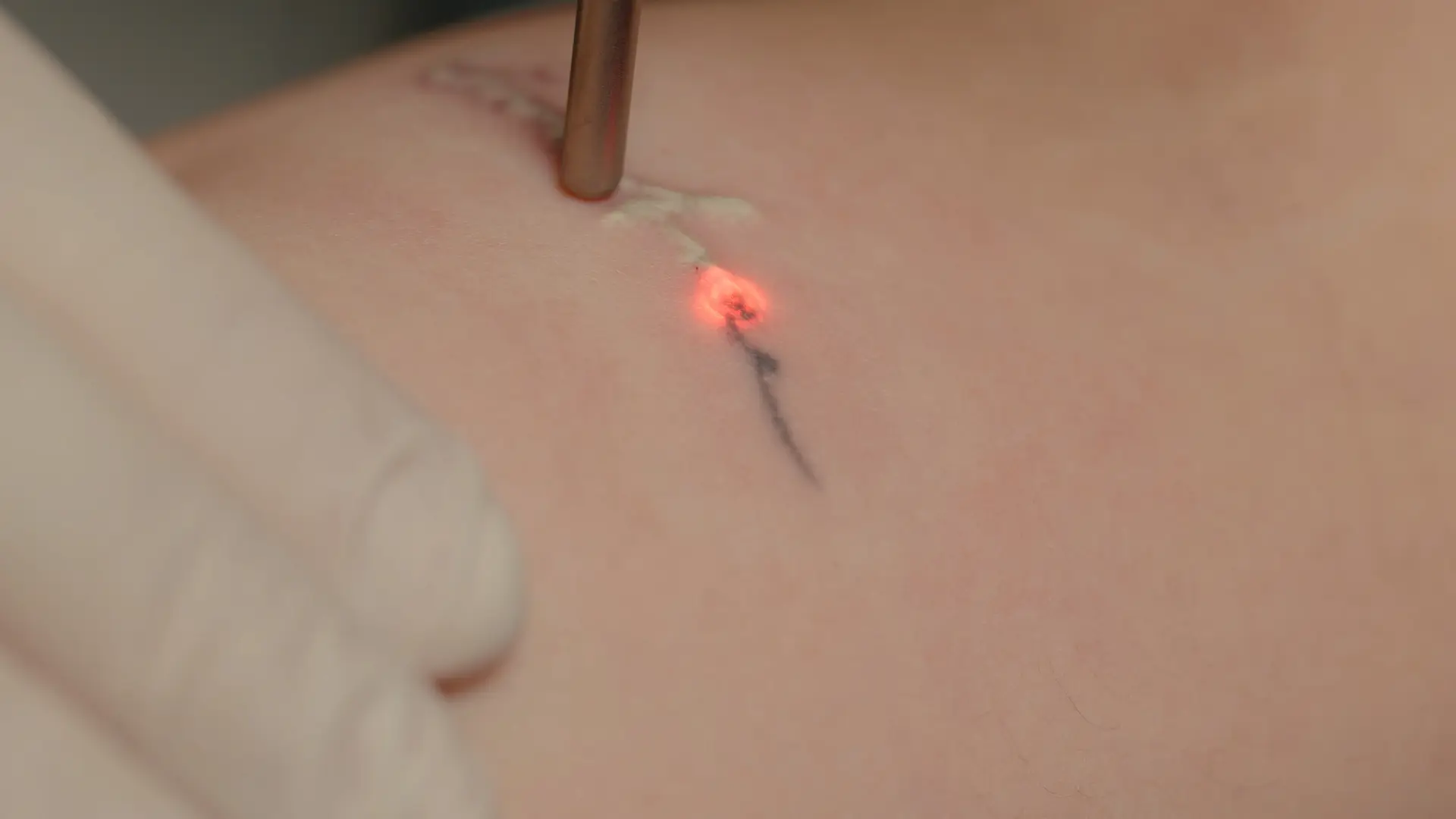
Latest generation laser technology Photon StarWalker® is a highly precise, safe and effective system that helps remove tattoos, permanent make-up and reduce unwanted pigmentation. The system generates laser light of different wavelengths to effectively target virtually any colour pigment .
The procedure not only improves the visual appearance of the skin, but also allows selective action on the pigment, keeping the surrounding tissue intact.


N.B.: This procedure can only be carried out after medical consultation!

Book now

The price is per 1x1 cm area.
We will contact you shortly to clarify the procedure or consultation times.

Starting at

 20,00

Amount

At a glance

In brief about tattoo removal with Fotona StarWalker

Before the visit

Before the visit

  • Before the visit

    Avoid sun exposure or solarium use for at least 3 weeks before the procedure (laser treatments are not performed on tanned skin)

  • Before the visitDo not use self-tinting products before the treatment. Your skin should be completely clean and dry before the treatment - please wash your skin and do not use make-up, lotions, perfumes or deodorants.
  • Before the visitIf there is a hair in the area to be treated, it must be short shaved (not more than 1-2 mm long)
  • Before the visitInform your doctor about previous treatments and medications (some medications, such as certain antibiotics, can increase the skin's sensitivity to light)
  • Before the visitIf you are planning to remove permanent make-up in the lip area and have a history of Herpes simplex virus, you should start taking antiviral medication the day before the procedure.
What happens during the procedure

What happens during the procedure

  • What happens during the procedure

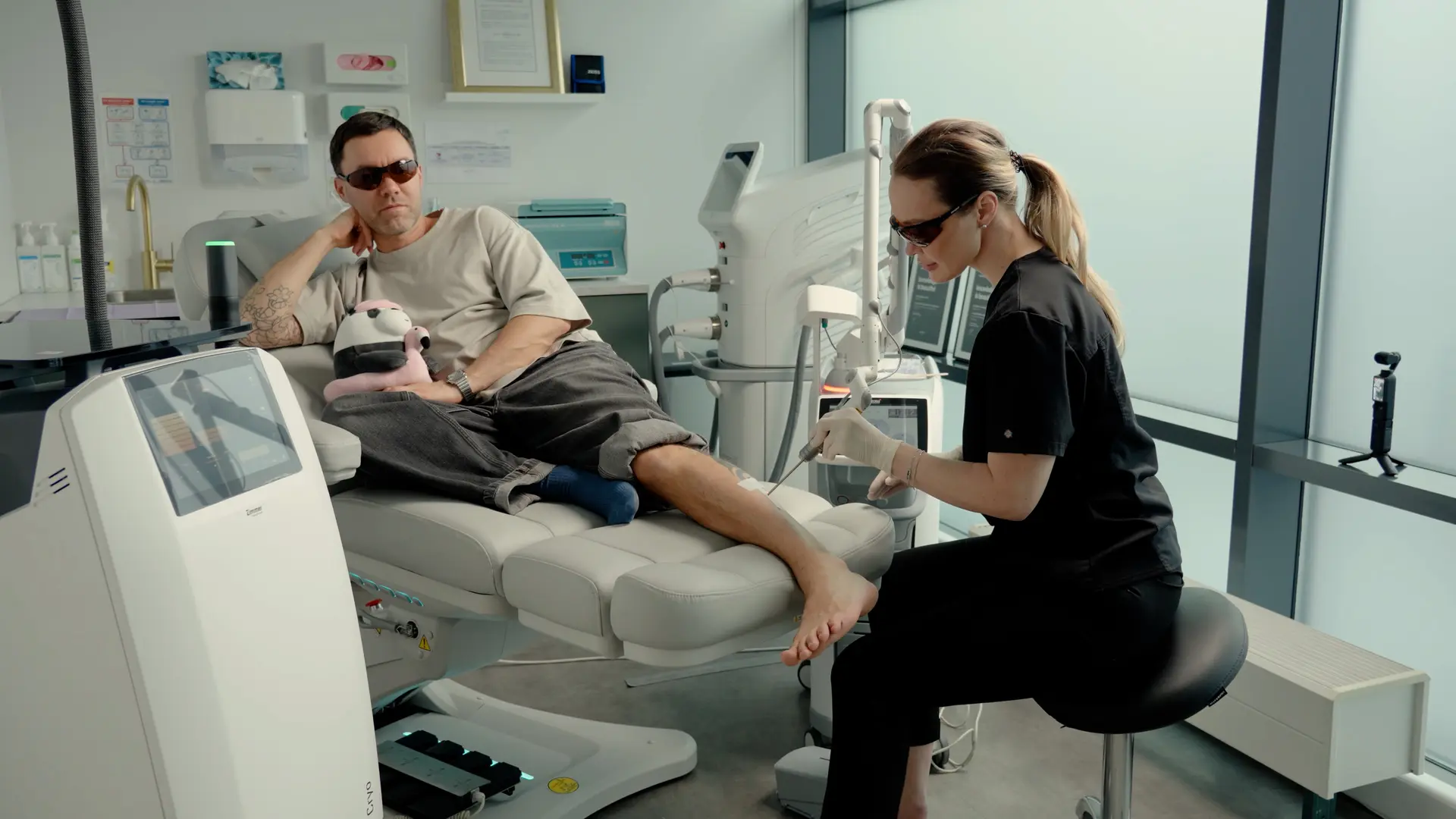
    Both the patient and the doctor must wear special goggles in the treatment room.

  • What happens during the procedureShort and powerful laser pulses selectively target pigment particles in the skin.
  • What happens during the procedureCooling with cold air is used during the treatment to reduce discomfort and heat sensation.
  • What happens during the procedureThe parameters of the treatment are strictly adapted to your skin type, pigment colour and density.
After the procedure

After the procedure

  • After the procedure

    Transient redness, swelling, mild crusting or blistering may be expected.

  • After the procedureIf there is visible epidermal damage, your doctor may recommend an antibacterial ointment.
  • After the procedureDuring the recovery period, excessive sweating should be avoided and irritation of the treated area should be prevented.
  • After the procedureIt is imperative to avoid sunlight and wear SPF sunscreen while drinking.
Results

Results

  • Results

    Gradual fading of the tattoo or pigment.

  • ResultsEven skin tone and improved skin quality.

As the body eliminates pigment gradually and the skin must be allowed to regenerate at the same time, several treatments at intervals of up to 3 months are necessary for optimal results.

The full course is planned individually.

Frequency

Frequency

  • Frequency

    Visible effects appear after the first treatment, but a course of 3-6 treatments is required for full results.

  • Frequency

    The result depends on the age, depth and pigment colour of the tattoo.

  • FrequencyThe length and quantity of a tattoo removal course is difficult to predict.
1 /

How does the Fotona StarWalker® work?

The photon StarWalker uses high-energy pulses to break down the tattoo pigment into microscopic particles, which are then gradually eliminated by the body through the immune and lymphatic systems.

Q-switchable (short pulse) MaQX technology

generates strong and short pulses of light, breaking ink granules into microscopic fragments.

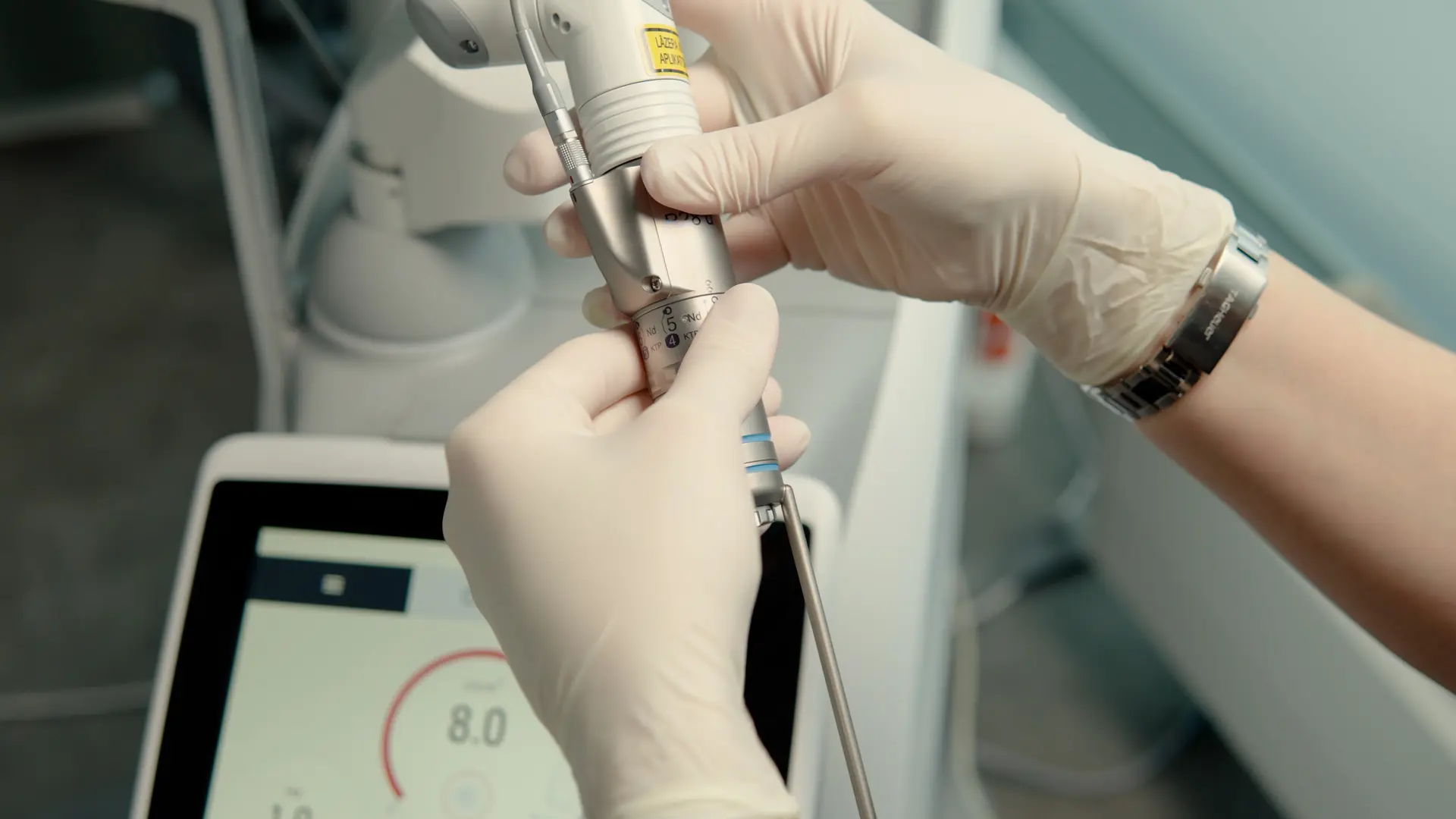
Different wavelengths (1064 nm, 532 nm, 585 nm, 650 nm)

allows laser light to selectively absorb and destroy virtually any colour ink - from classic black and brown to red, light blue and green.

FracTAT® fractional pretreatment

creates micro-channels in the skin, helping to release the pressure and gases generated during the treatment, thus significantly improving the laser's effectiveness and protecting the skin's structure

Benefits

  • High precision: different laser wavelengths (Nd:YAG and KTP) can be used for different pigment depths.
  • Suitable for all colours: the system is able to remove both dark and light ink tones.
  • Minimal thermal impact on surrounding healthy tissue.
  • A safe and controlled process.

Specialists

Specialists in tattoo and permanent make-up removal

FAQ

Frequently asked questions

How many procedures will be needed?

This depends on a number of factors. The higher the concentration of pigment in the skin, the more treatments will be needed. The location of the tattoo also matters - tattoos closer to the centre of the body (on the back, shoulders, neck) can be removed faster than those on the fingers, wrists or shins.

Do all tattoo inks fade equally quickly?

No. Dark colours (black, blue, brown), as well as red, orange and purple ink, are easy and fast. Green and yellow inks are the most difficult to remove and usually require a longer course of treatments. White ink, on the other hand, reflects all the laser light and cannot be removed with a laser.

Is the procedure painful?

Local anaesthesia is performed before the procedure. During the procedure, the patient may feel warmth or mild discomfort. To make the process as pleasant as possible, we use a special cold air machine that cools the treatment area with -20 °C to -30 °C cold air before, during and after the laser pulses.

Are there any special risks when removing permanent make-up (e.g. eyebrows or lips)?

The laser is very safe, but when treating permanent make-up on the face, patients should be aware that the pigment removal process may only partially fade the colour at first, or even temporarily darken the colour. This is due to the reaction of the ink composition to the laser beam and is a transient process during the subsequent course.

What are the possible side effects?

Skatīties tagad

What are the possible side effects?

The most typical reactions are temporary: redness of the area, slight swelling or the formation of crusts and vesicles, indicating a healing process. Sometimes, temporary changes in skin pigmentation may be observed - the treated area may temporarily become slightly lighter or darker than the surrounding skin.