
Linove Klīnika

20% discount until 01.12.25. USE AN OFFER

Back

Can botulinum toxin be injected into the eye area if you are the “puffy type”?

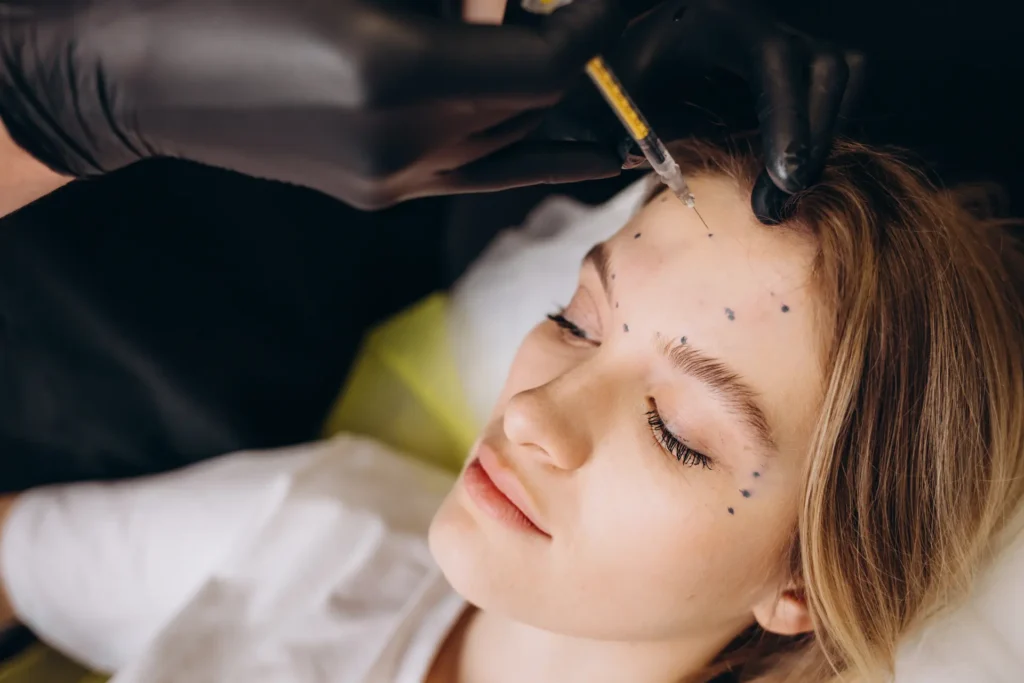
The question "can I put Botox on my eyes if I'm the puffy type?" is very topical, because the eye area is one of the first areas where both expression lines and puffiness appear. Patients often fear that botulinum toxin may worsen the swelling of the lower eyelids or make the "bags under the eyes" more pronounced. In clinical practice, I find that these concerns are usually understandable but not always justified - it largely depends on the anatomy, the injection technique and the experience of the doctor.

The eye area and oedema: why do 'oedematous types' have special issues?

The eye area is complex: the skin is thin, the subcutaneous structures are delicate and the mimic muscles are very active. The puffiness around the lower eyelid may be more pronounced in people who:

  • a tendency to fluid retention directly in the periorbital area;
  • quickly feeling "heavy" or swollen after sleep, salty food, tiredness;
  • have anatomical features that visually enhance swelling.

In this context, the logical question is: could botulinum toxin, which affects muscle function, upset the natural "drainage" balance and increase oedema?

What matters most: the "pump" function of the lower zone

From a professional point of view, the functioning of the eye's circular muscle (the eye ring muscle) is an important nuance. In practice, certain muscle fibres, especially in the lower area, act as a kind of "pump" - meaning that this movement helps to maintain physiological tissue dynamics.

Therefore, when it comes to injecting botulinum toxin into the eye area of a person with a tendency to oedema, my principle is clear: the procedure can be carried out, but anatomically justified caution must be taken and the lower area must not be 'touched' or unduly blocked so that the function of this musculature is unduly reduced.

Simplified: properly planned therapy allows you to work on the mimic wrinkles while preserving function where it counts, so as not to contribute to lower eyelid puffiness.

Common myths and concerns about botulinum toxin near the eyes

"If I'm the puffy type, Botox will definitely make me even puffier"
Popular opinion
Patient

This is not an automatic or inevitable scenario. The risk and visual outcome of an oedema depends on where, how much and to what depth the product is injected, as well as the individual anatomy. This is why the same procedure can give different sensations and effects in different people.

"The eye area is dangerous - it's better to do nothing"
Popular opinion
Patient

The eye area does require a high level of precision, but that doesn't mean it should be "taboo". Rather, it is an area where a medical approach, detailed assessment and correct technique are particularly important.

"The result depends only on the preparation"
Popular opinion
Patient

In botulinum toxin therapy, much of the result actually depends on the skill of the specialist. The preparation is the tool, but the outcome is determined by clinical thinking, an understanding of the anatomy and the injection strategy.

Safety, indications and restrictions: what I assess in practice

While I cannot and should not prescribe an individual treatment plan here without a consultation, I can explain what the professional assessment framework is.

What I always take into account before injections in the eye area

  • Where exactly wrinkles form (outer corners of the eyes, under the eye, elsewhere).
  • How active the mimic is and in which direction the muscles are "working".
  • Whether the trend is episodic or permanent, and what the dynamics look like.
  • What is the lower eyelid area: how "sensitive" is it to changes in muscle function?

Why one patient is suitable, another should be extra cautious

Periorbital anatomy is highly individual. The goal may also vary: for some it is a gentle reduction of wrinkles, for others a more pronounced control of mimicry. The more delicate and functionally sensitive the area, the more important personalised tactics are.

Why the result is so "hands on"

I often say to patients: botulinum toxin is very dependent on who does it. This is not a procedure where a "standard regimen" is enough. In the eye area, it is particularly important:

  • an accurate understanding of muscle anatomy;
  • choice of injection points that respect the function of the lower zone;
  • the ability to predict how a particular patient's mimicry will change after the procedure.

This is why I see in practice that, when you get to a specialist with the right skills and experience, patient satisfaction with botulinum toxin therapy can be very high. At the same time, this does not mean an absolute guarantee - in medicine, there is always an individual response and nuances, which we assess under control.

What you can do to make a safe decision

If you are prone to puffiness and are considering botulinum toxin in the eye area, my recommendation is to focus on a quality consultation. Ask questions about:

  • which areas are planned and which are deliberately not;
  • how the functional balance of the lower eyelid is maintained;
  • what result is realistic for your particular make-up.

The most important thing is not to go to the treatment stressed. A well-explained plan and a professional approach are usually the best foundation for peace of mind.

Conclusions

Botulinum toxin can be applied to the eye area even if you are the 'puffy type', but the correct technique and understanding of the role of the muscles of the lower eye area are crucial. By not stopping the function of the eye ring muscle where it acts as a 'pump', we generally do not contribute to lower eyelid oedema.

The decision is individual and based on anatomy, mimicry and clinical assessment. In the right hands, botulinum treatment is usually not a cause for concern about worsening puffiness - and often the patient feels even better as a balanced, natural appearance of the eye area is achieved.

Results

Botulinum toxin injection results in our clinic

"Full Face" technique

Botulinum toxin therapy, performed by Dr Lynova, focuses on relaxing overactive "depressor" muscles - these are the muscles that pull the cheeks down. By releasing this tension, we achieve a natural, synergistic lifting effect and a fresher, more open facial expression.

Result after: 2 weeks

"Full Face" technique

Botulinum toxin therapy, performed by Dr Lynova, focuses on relaxing overactive "depressor" muscles - these are the muscles that pull the cheeks down. By releasing this tension, we achieve a natural, synergistic lifting effect and a fresher, more open facial expression.

Result after: 2 weeks

"Full Face" technique

Botulinum toxin therapy, performed by Dr Lynova, focuses on relaxing overactive "depressor" muscles - these are the muscles that pull the cheeks down. By releasing this tension, we achieve a natural, synergistic lifting effect and a fresher, more open facial expression.

Result after: 2 weeks

You may also like

22.03.2026

Post-holiday fever: safe and sensible mitigation advice

Post-holiday oedema: how to reduce facial and body oedema safely and sensibly After the festivities, I often hear a similar question in my office: why is my face suddenly swollen, my legs heavier, my rings pressing, and what can I do about it? Most often it happens after sweeter and saltier food, less exercise, later […]
21.03.2026

Modern aesthetic medicine: natural, safe and personalised

Aesthetic medicine today: not just lips and cheekbones I am often asked: is aesthetic medicine today still just about lip augmentation, cheekbones and a quick visual effect? The question is understandable, because these are the procedures that are most often seen in public. However, in practice, I see aesthetic medicine in a very different way: […]

1 /